Wool and Roses

We woke to wool and roses,
and the smell of wet wood
creaking in a hypnosis
that only we understood.

A dime of sun swayed
on a burlap bed
that, unmade,
cradled your sea-turned head.

We were marooned:
and to the seeping wind
we had become attuned,
our hardened hearts chagrined.

You woke with lips of salt,
and fistfuls of fabric.
Wool and roses, you’d exalt,
our unpracticed kind of magic.

Waking never lasted long,
and with the gulls you weeped.
Tossed across the sea nightlong,
waves carried us to sleep.

© 2016 Stellular Scribe

How To Avoid Being A Jealous Writer

Artistic envy is easier than ever in this digital age. As writers, we naturally gravitate towards other creatives online to follow their work. At first it’s all good and inspiring, but after a few book promotions here, a blog blast there, it doesn’t take much to feel jealous.

I’ve experienced it myself: feelings of inadequacy and insecurity, that I’m never doing enough, that I can never compete. The world is filled with brilliant writers who have worked hard and found tremendous luck, and sometimes I wonder why I can’t just slip into success like them.

The problem is magnified when the object of envy is a close friend. You love them. You want to support them. But you feel sick to your stomach after reading the tenth Facebook post about their good fortune. You want to simultaneously congratulate them and shrink into a hole when they write something spectacular.

I’m not perfect. I still find myself thinking, “Why do you even try?” But I’ve managed to lessen the bite of the green-eyed monster by taking the following steps:

  1. Accept that we’re all brutal on the inside. To ourselves. To others. And it’s ok to feel crummy. It’s ok to admit it to yourself. Because if you acknowledge your jealousy, you acknowledge that everyone has feelings of self-doubt and resentment sometimes. Chances are, that exact person who you’re envious of is just as insecure as you.
  2. *slaps you upside the head* Now pull yourself together! Jealousy won’t get you any further than a blank page and a case of qualms! Life is too short and your creativity too expansive to keep wondering “what if?” and “why try?” *pats you on the shoulder* There, now. Sorry I had to get curt there. Shall we go on?
  3. Recognize your accomplishments. Maybe that’s writing a few sentences a day; maybe it’s getting published in a magazine. Rejoice in yourself and what you have done, because dang it, you’ve worked hard and you should love yourself and your passions first and foremost.
  4. Realize that the object of your jealousy got there for a reason. More often than not, it’s because they worked hard and put in the time and learned the business. Sometimes people get lucky; I get that. It’s an unpredictable industry. But if you accept that they deserve their success, then it’ll be much easier for you to congratulate them and figure out the steps you can take to achieve your own goals.
  5. Set goals for yourself. Maybe you want to query at least one agent a week or write one thousand words a day. Small or large, giving yourself something to look forward to will help keep your mind off feelings of uncertainty and inferiority. It’ll give you something to feel proud of!
  6. Think about why you’re jealous and put it into perspective. Is it because someone you know got a big-name, six figure book deal? There’s a difference between working for an art and throwing your art to the wind and hoping it lands on a publisher who is in a good mood. It is in no way an indication of your talent or worth if you do not have those same opportunities. What it really comes down to is what makes you happy: making art or raking in the profit?
  7. If need be, remove yourself. Hide someone’s feed on Facebook. Take a break from their blog for a week. If you like them and you’re jealous, take a break. If you don’t like them and you’re jealous, remove them entirely. Blocking someone is never the best solution, but it can help if feelings of personal inadequacy are impossible to shake off.
  8. Wish other writers well. This is the hardest part, but it’s arguably the most important. Without each other, our art goes nowhere. It speaks to no one. Think about a time someone complimented your work and how you felt. Think about how you would feel if you accomplished something that you cared about and poured your heart into, and were only received with jealous eyes. Support other writers, because one day they may be the ones wishing you well.

Happy writing!

© 2016 Stellular Scribe

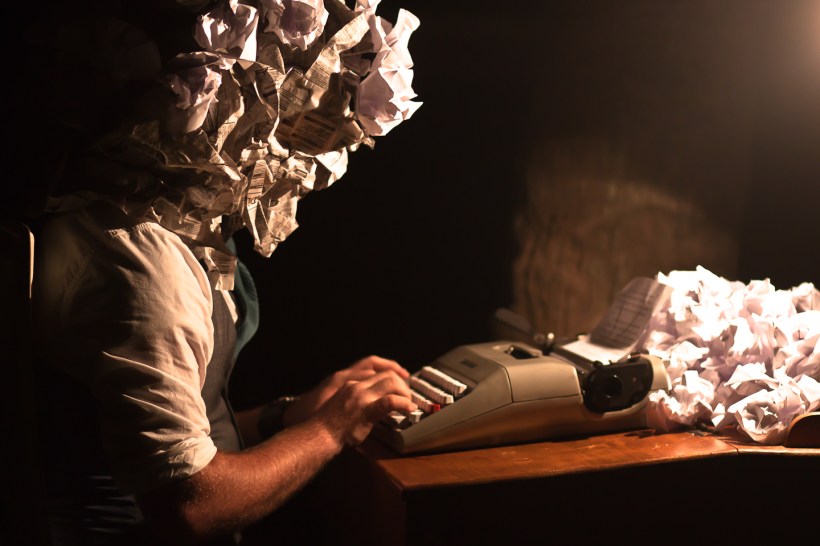
Image: “Writer’s Block” by Drew Coffman

Music Mondays: Part XVI

In The Picture of Dorian Gray, Oscar Wilde famously says that “those who find ugly meanings in beautiful things are corrupt without being charming. This is a fault. Those who find beautiful meanings in beautiful things are the cultivated. For these there is hope. They are the elect to whom beautiful things mean only Beauty.

In writing, there is no ugly meaning — even if the meaning is to expose the ugliness of moral corruption and vanity. Exposing, revealing, and reflecting can in no way indicate an ugly purpose; in fact, by Wilde’s standards it would be considered a beautiful meaning because it is composed as art for the sake of art.

There is no such thing as a moral or an immoral book. Books are well written, or badly written. That is all.” This rings true for all art. A piece that deals with themes of depravity or devolution is not morally corrupt; it is quite noncombatant. Art serves as a narrator, a biographer of what the world might be or could be.

Allow this playlist to serve as your narrator. Find out what your writing might be.


Happy writing! 🙂

Hibernate

I know the numb bliss
of ice gripping mountain tops
and wind licking lichened rocks.
I know the hairs that rise on skin
like spring on a cloak of snow — I’ve been
to spring before, you know.
But it was so very long ago.

I know the numb kiss
of sleep before a winter’s plight;
somehow I’ve made it all these nights
even as my veins turn to stone.
The chambers of my heart groan
as glaciers crashing in my chest,
but I don’t remember the rest.

I will surely miss
the scent of summer’s thighs
back when I sat in sunrise,
but she complained of my weight
and now I’m forced to hibernate.
Hush has fallen white and dumb;
and I am blissfully numb.

© 2016 Stellular Scribe

ugly meanings in beautiful things

in love
I begin by deceiving myself
in romance
I end by relieving myself
of scars that streak red
across waxen faces
of lines that sag cruelly
against youth’s graces

in love
I begin by deceiving myself
in romance
I end with perceiving myself
as sallow with
the age of my sins
but only upon
my painted on skin

in romance
I am older
than my friends
older than
any end
that in striving for
becomes what I am dying for —

but my face is clean
clean of the sin that boils
my heart
clean of the pride
that spoils each part of me

that could be redeemed

in love
with myself

© 2016 Stellular Scribe

Music Mondays: Part XV

From the moody to the broody to the downright angsty, writing can come with a lot of er…darker moments. So what better way to fuel your somber tragedies than to listen to some equally somber playlists?


Ah, the apocalypse. Ash. Dust. Wandering around wastelands. Trying to build a civilization from the ground up takes a good deal of sweat, blood, and wayward emotions, and this gem of a playlist will be your righthand man the day after the end of the world.


So you think the apocalypse is bad? Ha. Ha. Ahaha. Try hell. With this playlist, the most dire fates of your most devious characters will be made fiery, fierce, and undeniably excruciating.


Happy writing!:)


Highfeather — an excerpt from my novel

I’ve never actually shared an excerpt from my novel before. It’s a little baffling to think; two years of blogging and the most I’ve ever posted about my biggest work have been angsty poems and passing mentions in writing tips.

Ah, I love the stench of first drafts in the morning. Without further ado, I present to you, in all of its unedited glory and with absolutely no context whatsoever, an excerpt from my novel.


Aleron remembered Mage saying how Highfeather looked as if it passed judgement on each traveller who crossed in its shadow. As the tower loomed high and blazing over him, he sensed its stony stare, felt it threaten to topple over and crush him for all he was.

Still ablaze. Still burning, but never fallen.

The fire crackled from the peak of the keep tower, casting the stonework of the walls in pulsing, red heat.

And that is where I must go, he thought.

It must’ve been raw instinct that rolled his joints and moved his limbs. He was mechanical in his dismounting of Dusk, systematic as he secured her behind a boulder and hitched his satchel over his shoulder. One foot met its mark on the ground in front of the other, and he carried himself to the fort.

The cold spot he had rode through left his mind numb, but as he passed under the entrance of the curtain wall he could feel the heat of the tower radiating on his skin. He was tired, so very tired, and the warmth only kneaded the worries in his brain, only made him long for sleep and forgetfulness.

He crossed an empty and overgrown bailey. In the night, the shadows cast across the yard by the fire were made long and lanky, like great arms stretching across the earth. The effect was nothing short of mystifying, but he was struck from his contemplation when a fist of thunder pounded the sky.

Up the tower, relay the spell, gather and feast, he thought.

The door that led into the main keep must’ve burned up three years ago, because all that was left was a pile of warped iron. Aleron stepped over the heap to pass under the threshold, and then he was swallowed by darkness.


He became aware of each hitching breath in his chest, and in the still black of the keep, he felt like the only living thing in the world. At first, all was silent and obscured by shadows, but then he heard something soft and fragile, like wind singing through glass. He stumbled through the dark after the sound until he saw a warm glow emitting past a crumbling wall.

He ran for the light, because he didn’t like the restlessness that set into his legs when he stood still for too long. He felt that if he were to keep to one place, then the specters from the smoke would leak into the tower after him. It was like a thousand ghosts were watching him, and he had to keep moving lest they seep into his mind.

He turned around the wall and found himself looking up a spiraling stairwell. The stone trembled in firelight, the source of which lay beyond his line of sight. But the thin music still whistled in his ears, high and begging him to hear more.

He climbed.

He climbed after the light, the warmth, the song. He climbed wondering if he was doing the right thing. He scaled the uneven steps, and he could hear everyone he ever loved warning him, fearing for him, anticipating his movements.

Be watchful, Aleron. Even I forget it sometimes, but you are still a boy.

I’m afraid of what you mean to me, Aleron. Because you’re a bird. And I’m a worm. And birds pluck worms from the dirt.

You brought me to Ferric so that I could change things. But I am in here, and you, whether you like it or not, have more power than all of us.

I’m afraid that you’ll drop off the map altogether.

Your enemy is whatever’s out there twisting people into Wraiths, making people suffer.

Run!

And then he was sprinting, tearing up the stairs, his heart leaping into his throat. And the sound, that spindly song was growing louder and shriller, and he ran with his blood coursing under his skin, threatening to shatter his veins. And he ran with his world, his only chance, clattering against his back, and ghosts were chasing after him, and heat building around him. And he hurt.

He breached the stairs and staggered onto the roof. The grating music pinched off into silence, but the heat from the rising fire engulfed him. The surrounding pinnacles stood ablaze, and the smoke was so thick that he could not see the stars.

The Three can’t save me now, he thought.


© 2016 Stellular Scribe

An Uneventful Paradox

This is a question.
I am a liar.
Did you catch on yet?

‘This is a question’
is not a question.
‘I am a liar,’
but a liar never admits.
‘Did you catch on yet?’
is the only intention.
Even my own words
fail to commit.

Is this a statement?
I don’t tell the truth.
Aren’t you listening?
F*ck being uncouth.
Why do we censor?
There’s nothing to hide for.
Is this a paradox?
No, I’m just a liar.

© 2016 Stellular Scribe

Grown-Up — a quartet of haikus

A daubed memory:
a singular tin soldier
stands guard in the rain.

A stained memory:
battles wage with wooden swords
in an oak’s shadow.

A scrubbed memory:
a voice sings through lightning bugs,
it’s time for dinner!

A lost memory:
weapons resign in the grass;
the foe dissipates.

© 2016 Stellular Scribe

Should Great Writers Steal?

You’ve probably heard the famous quote “good artists borrow, great artists steal” (commonly attributed to Pablo Picasso, but most likely originating from T.S. Eliot).

Before you sound the alarms, there is a world of difference between creatively copying and blatantly plagiarizing. Plagiarism, at least in the context of writing, is the act of taking another person’s work, word-for-word, and passing it off as one’s own. It is never acceptable, excusable, or, in the simplest of terms, ok.

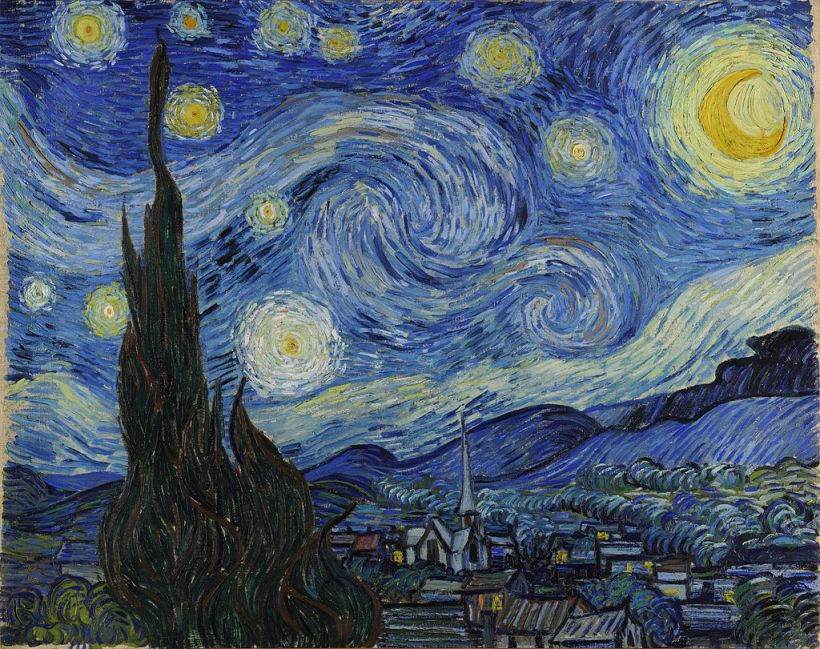
What I like to call “creatively copying” would probably make more sense if I used the analogy of walking down an art museum hallway. You’re surrounded on all sides by splendidly crafted paintings of every era, of every classical artist. Clearly, these are all masterpieces. Then, just as you think you’ve seen it all, something catches your eye, something that stands out from the rest. For you, it might be the extraordinary pointillism in Georges Seurat’s A Sunday Afternoon on the Island of La Grande Jatte or that singular, swirling gold moon in Vincent Van Gogh’s The Starry Night.

1024px-Van_Gogh_-_Starry_Night_-_Google_Art_Project

You find an element that speaks to you, and from there are inspired to create your own pointillistic piece or painting themed around that luminous, eternal moon.

I believe that the same principle applies to writing.

For example, I first read George R.R. Martin’s A Game of Thrones three years ago. As I read, I kept coming across small, striking descriptions that arrested me with how vividly they popped off the page into my mental image of the story. Every time I found one of these extraordinary wordings I would dog-ear the page, and by the time I got to the middle of the book I realized that there were just too many gems to continue damaging the paper. So I started to write them down.

IMG_2515.jpg

This is just a small sample from my collection of descriptions.

What did I do with these phrases? Many remained untouched, isolated from their original sentences in the crumpled pages of my notebook. But I always kept them in the back of my mind, and as I was writing my novel I would suddenly remember the perfect pair of words for the perfect situation. I wouldn’t copy them directly, of course. “A reptile stare” became “a reptilian glare.” “Pale moon face” became “sunken, moon-shaped cheeks.” “Frog-faced” became “frog-like lips.”

I used the same technique for the rest of The Song of Ice and Fire series, and for many other books that stuck with me: Neil Gaiman’s American Gods, Patrick Rothfuss’ The Name of the Wind, Nicola Griffith’s Hild. They were just bite-sized, beautiful phrases, but one by one, they helped me to learn to look for remarkable qualities in simple descriptions.

I’m a firm believer that great writers must be great readers. And, by nature, a writer who reads is a writer who steals.

© 2016 Stellular Scribe