In Her Eyes- and original poem

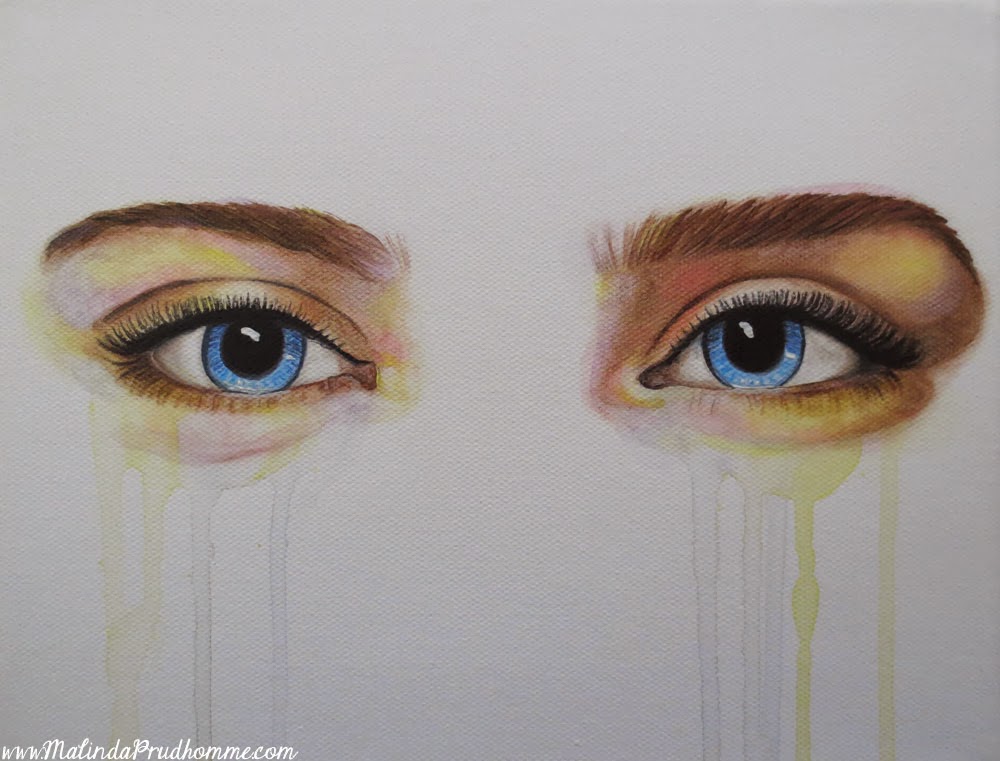
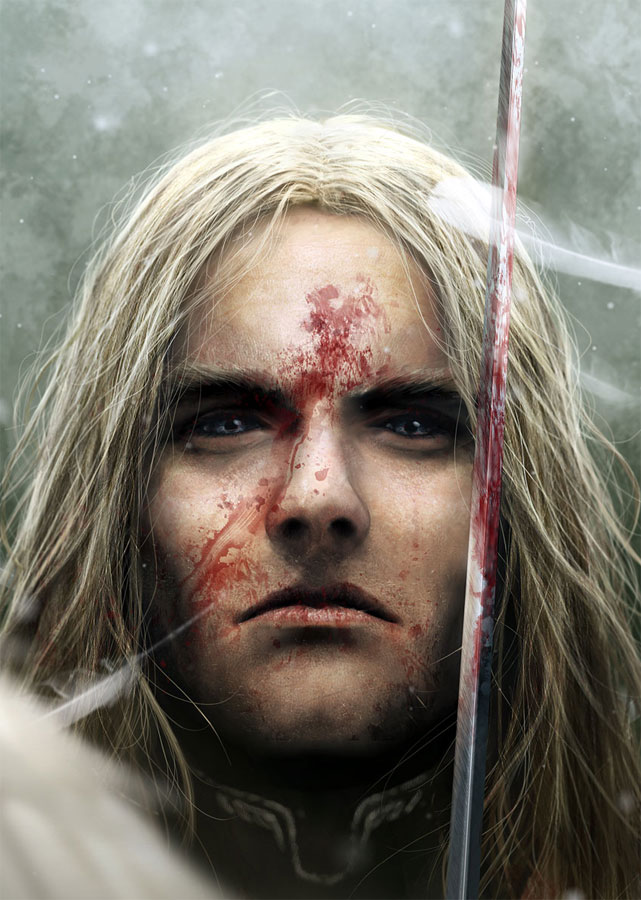
"Eyes of Ice" by Malinda Prud'homme
Eyes of Ice” by Malinda Prud’homme

There’s a distance in her eyes,
like a path cutting through the snow,
weighed by wonder, cold as I blunder,
through the white, unsure where to go.

I could walk into her eyes,
trekking footprints through her soul,
jumping, reaching, shouting, screeching,
my voice muffled in this hole.

I get lost inside her eyes,
wandering past her doubts and fears,
sifting memories, dark reveries,
’til I find what wrings her tears.

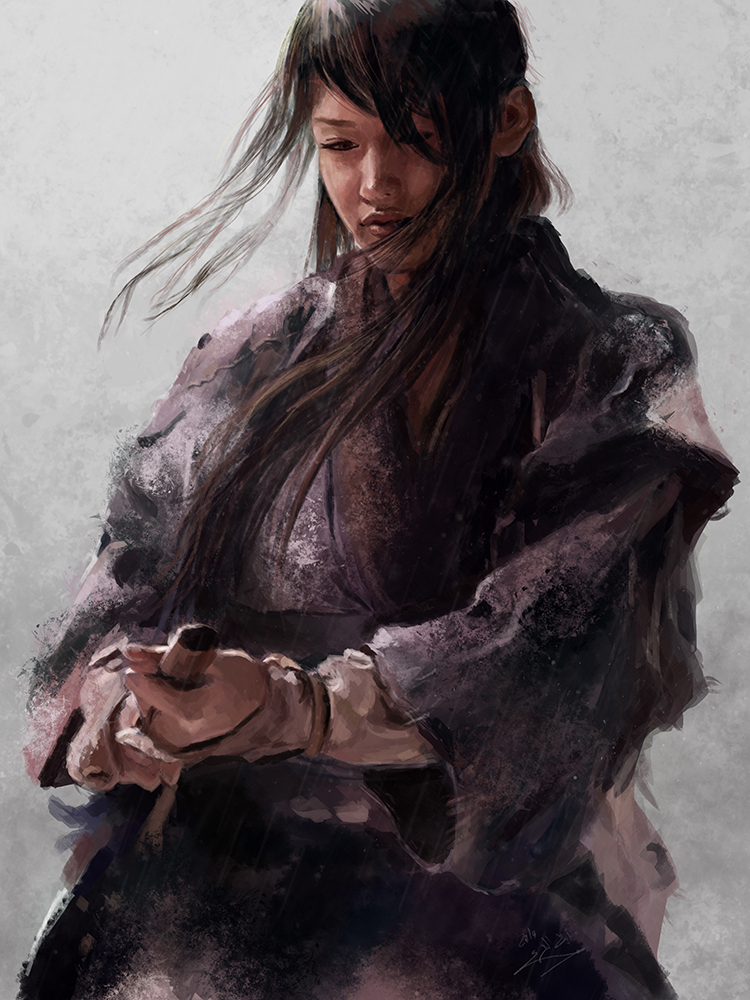
she falls gracefully- an original poem

"Free Falling Dream" by Richard Davis
Free Falling Dream” by Richard Davis

she falls gracefully
held aloft by the wind
which speaks against her back
barely a whisper
telling her not to fear

in breathing
she does not
but the breeze
in exhaling
strengthens her
lengthens her
expands the vitality
in her skin

she falls unafraid
her hair waltzing cheek to cheek
with the sky
and she touches
so tenderly
the years gliding by

i wonder how it feels
to slip through curtains of earth
quickening and steepening
hurdling through folds of
endless azure

no ground to hit
no breaking the fall
a smile swims across her lips
she falls gracefully


Writing: The Voice

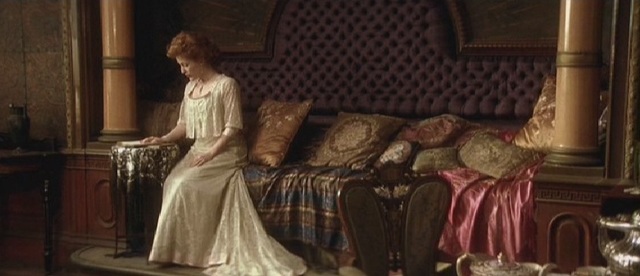
"A Girl Writing" by Henriette Browne
“A Girl Writing” by Henriette Browne

Writing is equal parts pain and pride, ease and effort, ardor and acceptance.

The pain is drawn from words, which torn from the heart, bleed raw and wet on the page. The pride is preened with the belief that what we write will elevate us and last longer than our own selves. With ease, the sentences mold to each other in fluid-fashion, and with effort, the ideas that bind us refuse to be transferred to mere words. Writing is an art, that without ardor, has no hope of ever communicating with the world. But writing is also a confession; the acceptance of what we fear, what we love, and what we want.

So how do writers write? Ernest Hemingway is credited with saying, “There is nothing to writing. All you do is sit down at a typewriter and bleed.” This can be interpreted in more than one way; writing should come from within, honest and raw and real and never forced. But there is no such thing as a perfect writer, who can spew out sentence after sentence without questioning their syntax or sense. To write well, a level of ferocity is required. If necessary, a writer must rip out the words, showing no mercy, and possibly damaging themselves in the process. To write is to feel, and to feel is everything; heartache, desolation, vivacity, elation.

In short, writers must extract their voice. There is no formula to writing, no set of guidelines that one can refer to when questioning where to put this word and how to convey that idea. Sure, countless resources and advice can be found in books and online, but none of them can give a writer voice. The voice makes the writer, and essentially dictates how one writes. But voice is not limited to writing; it communicates through all forms of art.

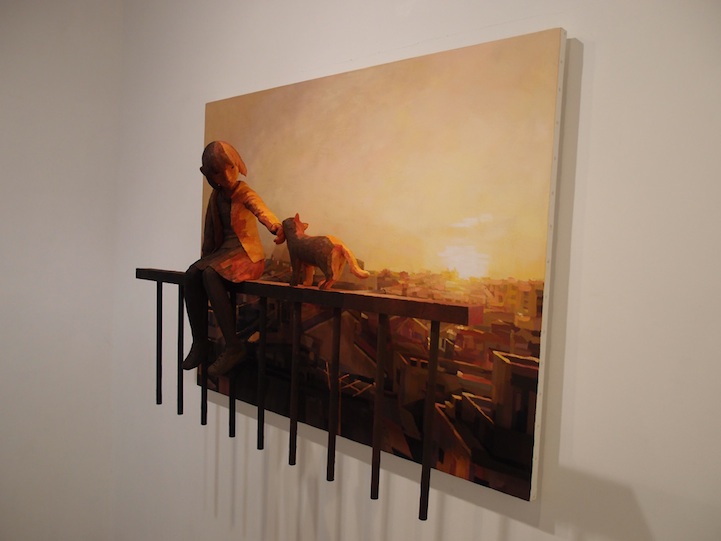
"Walking" by Shintaro Ohata
Walking” by Shintaro Ohata

For example, Shintaro Ohata, a Japanese multimedia artist, found his voice through depicting little things in everyday life. By pairing sculptures with paintings, he captures a unique light in his portrayal of everything from convenience stores at night, city roads on rainy days, and even fast-food restaurants at sunrise. On his most recent showing, “Polaris”, Shintaro Ohata says, “I named this exhibition ‘Polaris’ because I long for something absolute and firm like ‘Polaris’, which is always very bright and seems to be situated in the same place of the universe at all time.” His voice lies in his use of different mediums to portray the beauty that can found in simplicity.

In many ways, visual artists, such as as filmmakers and sculptors, go through the same process as writers when it comes to finding their voice. They feel the same conflicting emotions; the uncertainty of what will come of their work, the passion that goes into creation, and in the end, what the piece is really all about; the confession. It is the confession that communicates with the target audience, grasping their attention and gravitating them towards the idea, the art, or the product. And it is the confession, the pain, the passion- that makes the voice.

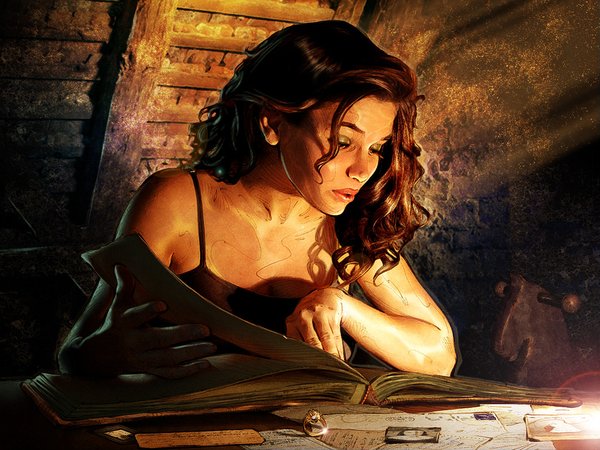
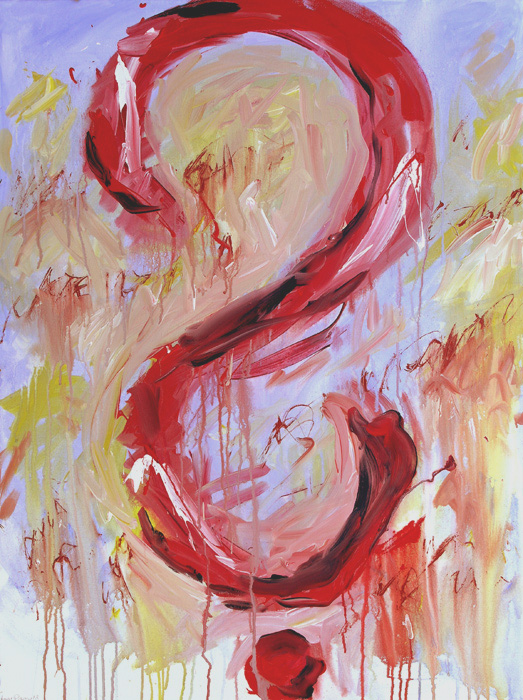
Prevail- an original poem

Study 4 by Ayah Alghamry
Study 4” by Ayah Alghamry

In an age of songs,
legends are lost,
bent and broken until
they are not the same tale.
Heroes are erased,
villains repainted,
destinies misplaced,
fates fabricated.

In an age of legends,
songs are re-versed,
twisted and turned over
until hymns fall out of tune.
Choruses crumble,
notes are reprised,
bards weep and rumble;
the lyrics are lies.

In an age of uncertainty,
what will I be?
Will I be remembered
for all history?
Or will the tongues betray me,
and time warp my tale-
will I be erased?
Or will I prevail?

Who I Am- an original poem

source
source

Will these chilling encumbrances never cease?
I am haunted by want, my soul turns to desolation.
Desire ruthlessly burns a forbidden path,
a flaming stepping stone along sets my fate.
But I can never be free from rejection,
never retire from this incessant burden.

It is who I am.

They call me parasite,
they say I am a leech adhered at the heel;
determined, stubborn, indignant.
I will suck you dry until you are a mere shell,
but what will you get in return?
A hopeless dream of chances yet unheard?
A faithful drone by your side eternally?
I would laugh, because you should know:

That is not who I am.


Today I was sifting through the dusty labyrinth of my computer archives, and found this poem. It’s from a few years back, when I was taking a course on American Literature. I wrote it in response to the character Lily Bart from The House of Mirth by Edith Wharton. 

In The House of Mirth, Lily’s a beautiful, young socialite in 1905 New York, whose biggest character flaw is her pride. In the poem (which is written from Lily’s perspective), I aimed to get across her desperate desire for financial security. When she turns to a married man for support, though, he asks for more from her-more than she is willing to give. In the end, Lily may be a ‘gold-digger’, but she isn’t willing to sacrifice herself.  

I Live For The Mystery- an original poem

"Title" by TamasGaspar
Title” by TamasGaspar

I enjoy the unraveling,
the debunking,
the revealing.
I live for the challenging,
the confronting,
the annealing.
The mystery’s only fun
when the chase has begun,
and the puzzle isn’t puzzling
’til I’ve given it a spun,
and revealing the riddle
isn’t the end of a case,
but the death of a hurdling,
intellectual race.
I devour the swindling,
the perplexing,
the conspiracies.
I live for the kindling,
oh so vexing,
sweet mysteries.

Animus- an original poem

"Angels sword" by Marek Okon
Angels sword” by Marek Okon

Your words are foul,
both birdlike and base,
and the fury that swarms me
when you speak
is a frightening thing.
Your voice digs into my skin,
fierce as a crow’s squawk
and sharper than its talons,
and though you have done me no wrong
but to poison the air with your tongue,
it is animus that ignites me.
I have no right to hate,
I have no right to wish your lips still
or dream of my ears falling off
so that I should never
be filled with your foul words again.
My anger astounds me,
my animus alarms me.
Raven shrieks
and yowls of beasts
would be harmonious in place
of your toxic breath.
If only you’d quiet,
if only you’d listen,
if only you’d realize your rancid words.
Then perhaps I would be relieved of
animus.


This poem ended up going a bit differently than I originally planned. Its structure’s a bit iffy, so I might come back to it later to iron out some kinks. The narrator of this poem is a pretty messed-up original character of mine, in case you were wondering.
 

Begin at the Beginning: Writing

‘Begin at the beginning,’ the King said, very gravely, ‘and go on till you come to the end: then stop.’

-Lewis Carroll, Alice’s Adventures in Wonderland

So you’ve got your characters. A good grasp of your plot. Perhaps your mind is even wandering to the sequel. You’re all set to hit the ground running, head first into the first chapter. But then-
the
Perhaps even harder than the end is writing the dreaded beginning. Sometimes, it just doesn’t come naturally. You know what you want, but you don’t know how to get those pesky words on the page without overwhelming, boring, or confusing the reader.

Is there a wrong way to write a beginning?

The short answer: no.

The long answer: no, but- there are elements that characterize a good beginning that need to be taken into account.


1. Get the reader to care.

No one wants to read a story that opens with Mary Sue preparing her breakfast cereal and thinking about watering the porch plants. I’d drop that book in the heartbeat. But who knows? Maybe on the next page Mary Sue packs a hand revolver in her purse and leaves for her work at an underground drug cartel. I’d never know that, because the opening scene didn’t make me care.

Keep the reader guessing. If they’re not curious about what happens next, then you’ll never get them to flip the page.
Waiting for the Next Book

 2. Engage the reader in the world.

Basically, you’ve got to slap your setting in the reader’s face. Don’t overwhelm them, but make sure they know where the character is, because there’s nothing worse than being introduced to a well-rounded character and having no idea where the heck they are. They could be floating in space, for all the reader knew. Immerse them in the time, place, and atmosphere with sensory details and perception through the characters. Remember; show, don’t tell. It’s especially important to avoid purple prose here, because excessive adverbs and flowery, useless words are a big turn-off and distract the reader from the central conflict.

3. Make the tone known.

You have to ask yourself; what do I want the reader to feel? If your writing is light-hearted and witty, and you want the reader to feel light-hearted and witty, then by all means, make the beginning light-hearted and witty. As Alice LaPlante says in her book, “The Making of a Story“,

A common problem one sees in beginning work is that a story will begin in one vein- say, serious and realistic- and then turn to slapstick comedy, or science fiction, or some other kind of tone. Whatever the feeling you want your readers to get from the piece should be apparent from the very first sentence.

There’s nothing wrong with having a dark fantasy with comedic undertones, you just have to maintain a balance throughout your writing- and that includes the first scene.

4. Present characters and their problems. 

Reader, meet my friend, character. This is his/her problem.

Introducing a character is always a big moment, for the reader and the writer, and in the opening scene, its execution is doubly important. The character has to leave an impression on the reader, even if they don’t say anything in that scene. Make the reader feel something about the character, whether it be admiration, embarrassment, anger, or pity. For main characters, hash out the basics of what their situation is/what they’re going through.

Again, this is all about getting the reader to care.
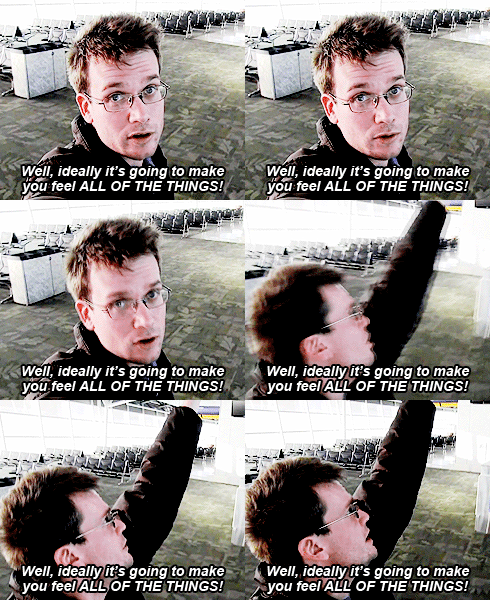
john green5. Keep it active and apparent.

Never, never, nevereverevereverever make the opening scene a festering vat of info dump. I know I said that there’s no wrong way to start a story, but info dumps are a crime against fiction. You may have an elaborate history and rich culture designed for your world and characters, but never use the opening scene to plop it all upon the reader. It’s overwhelming and distracting. If you have backstories and origins, weave them into the plot naturally.

The opening scene should be clear and concise. The reader should know what’s happening and who’s doing what without risk of confusion. Make it enticing and exciting, but don’t drown your reader. Please. For all our sakes.


Whether you’re planting your reader right in the middle of the action or introducing them to your fictional world through a thought-out narrative, the opening is crucial to establishing your story. Don’t treat it like any other scene; give it thought, give it character, give it heart. And remember, first drafts are called ‘first drafts’ for a reason! Take a deep breath, and just write.

Good luck!
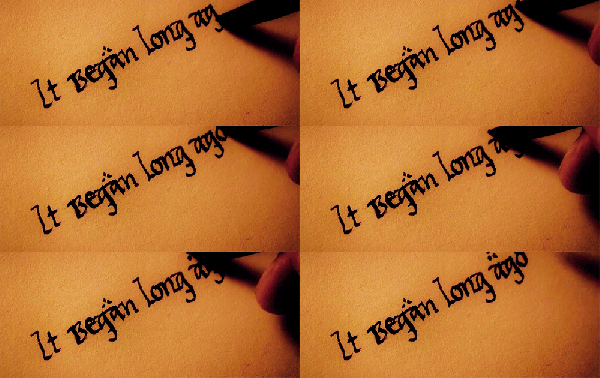
hobbit

For all your creative writing needs, I recommend reading “The Making of a Story” by Alice LaPlante. A lot of the advice I give in this post is inspired by her insightful chapters about everything from character development to revision.

To Question A Question- an original poem

"The Answer is Happiness...And What Was The Question?" by Anne Rosenvald
The Answer is Happiness…And What Was The Question?” by Anne Rosenvald

Can I ask this really quickly?
May I redirect your question?
Are you aware that filling questionnaires
is a sign of sure depression?
Why do you go about your days
reading personality tests?
When it would be keen to turn off your screen;
’cause don’t you know yourself the best?
Am I questioning your question?
Or simply being much too shrewd?
Is anxiety your priority?
Will you please stop me if I’m rude?
Can I ask this short and sweet now?
If your results are less than par-
will you lessen on all the questions? ‘Cause
you are just fine the way you are.