Writing Kindling #3

Writer’s block may seem like a terminal illness, but sometimes the smallest of sparks can “kindle” your craft. Today I bring you a list of ten 1-2 sentence writing prompts that will help build up your white blood cells and give writer’s block a good kick in the pants. Copy them, tweak them, consider them, leave them. It’s up to you!

  1. These memories aren’t mine.

  2. Thick, curling plumes of smoke. That is all I remember.

  3. This time, she was telling the truth.

  4. “Try it; you’ll love it!”

  5. It was silent until it wasn’t.

  6. Obviously, he was going to have to die.

  7. My death was a strange event.

  8. “Because,” she said, as if that lonely word could answer all of my questions.

  9. His face was a mirror of her own horror.

  10. Her fist slammed the desk like a thunderclap.


I’d love to hear what you come up with. Feel free to share your writing in the comments!

Happy writing! 🙂

If Writing Is Selfish, Then I Am Scrooge

please work god.png

I’m sure by now most writers have heard the worn-thin saying that anyone who puts pen to paper is a selfish creature. It was George Orwell who said:

All writers are vain, selfish and lazy, and at the very bottom of their motives lies a mystery. Writing a book is a long, exhausting struggle, like a long bout of some painful illness. One would never undertake such a thing if one were not driven by some demon whom one can neither resist nor understand.

I suppose that when I first read Orwell’s “Why I Write,” I was reluctant to attach myself to any of those harsh adjectives. I wasn’t vain. I certainly wasn’t selfish. Heck, I was the neurotic opposite of lazy. Writing wasn’t a struggle; it was a pleasure. I was, as far as I knew, devoid of demons.

When I think back on it, when I first absorbed Orwell’s long-echoed advice (or rather, observations), I wasn’t doing much writing myself. I said I was a writer, and I loved writing — but I hadn’t yet attached myself to a project I was passionate about or truly committed my free time to improving my craft. When I started to write more and actually develop characters and worlds and plot lines that I cared about, that quote meant something completely different to me.

Writing was a selfish act, I realized. I was selfish. I was the Scrooge of my own, blocked-off world, a world that I thought worth investing precious time into.

When we write, we pour our hearts into something that, at first, only exists to us. By simply believing that what we write matters, we indulge in egotism. When we write for ourselves, we are self-indulgent. When we write for others, we are vain. When we are vain, we run the risk of creating self-inserts — and after all, aren’t self-inserts selfish?

At first, it was an unsettling notion.

But then I thought about what the word “selfish” actually meant, and it didn’t seem so callous and narrow-minded. Merriam-Webster defines it as

concerned excessively or exclusively with oneself :  seeking or concentrating on one’s own advantage, pleasure, or well-being without regard for others.

Isn’t it a good thing to care about yourself? Isn’t seeking to improve your mind and pursue your passions what you should always be doing? Writing “without regard for others” might seem harsh, but really, all it means is to do what you want without worrying about what others think. Write the story that you want to write, not the one that you think will sell or be critically acclaimed.

I, for one, am proud to be a Scrooge if it means doing what I love unapologetically. 

 © 2016 Stellular Scribe
If you’re interested in my illustrations; get this design on a t-shirt or other product at Redbubble! Thanks. 🙂


Music Mondays: Part XI

Today’s theme: high adventure and forbidden romance!

What’s a legend without a long lost love? A hero without a passionate love affair? A romance without a little danger? Today I’ve compiled for you two of my favorite dragon-slaying, paramour-rescuing music mixes. Both start with a piece from the extensive Final Fantasy soundtrack, and both go together like time and tide, sand and surf, dawn and dusk…macaroni and cheese? Eh, you get the idea.


If anyone is interested in these playlists and wants to know the full track list, leave a comment and I’ll let you know.

Happy writing! 🙂

Writing Kindling #2

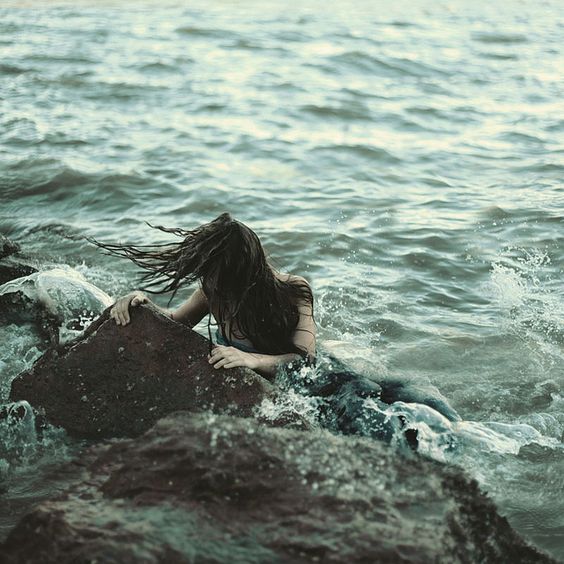
Three times a week I will post a picture, video, song, or sentence to “kindle” your creative writing! Today, we have the photo “High Tide” by Kiara Rose.
cb49023dfd5b44ba4dbe91b23b70a32d

Ask yourself: Who is she? What is she? How did she get there? What is she feeling? Write about who she is, what situation she is in, and what she will do next. It can be a poem, short story, long fiction, anything — let the kindling commence!

I’d love to hear what you come up with. Feel free to share your writing in the comments!

Writing Kindling #1

Three times a week I will post a picture, video, song, or sentence to “kindle” your creative writing! To kick off, we have an illustration by the late American painter, Coby Whitmore.

peep
Coby Whitmore

Ask yourself: What is she looking at? Why is she hiding behind the curtain? What’s going on in her head? What sort of expression is she wearing? Write about who she is, what situation she is in, and what she will do next. It can be a poem, short story, long fiction, anything — let the kindling commence!

I’d love to hear what you come up with. Feel free to share your writing in the comments!

Writing: The Early Bird

ideas wake me

I feel like we hear a lot about the writer who works into the dead of night, scraping out word after sleep-deprived word until the morning light creeps through her window.

Don’t get me wrong, I’m guilty of the stereotype. It is currently 1 a.m. as I am writing this and I haven’t even eaten dinner yet.

But I think there’s a lot to be said for the proactive early bird, who wakes ready to write. I think — and this is shocking, coming from me, the ultimate night owl — that they might actually have a brilliant thing going for them.

I don’t need an alarm clock. My ideas wake me.
— Ray Bradbury

I am an incredibly unpleasant person in the morning, so of course it was a good idea for me to try out this waking-up-at-a-reasonable-hour-and-actually-being-productive thing. Yeah…maybe not. The first day I snoozed through the alarm and had barely enough time to get myself ready for school, let alone make time to write. The second day was the same. And the third. And the fourth. And the — you know what? Let’s just skip ahead a week.

Finally, finally, I forced myself out of bed at the bright and beautiful hour of 5 a.m. On a Saturday. Ugh.

I had a plan that I was determined to stick with. No coffee. No food. No checking my phone. No email or social media. No distracting, click-bait websites. No leaving my room. And absolutely no rolling back into bed.

That last one was the toughest.

I moved to my desk, drank the glass of water I had placed there the night before, and opened my notebook. That’s right; I went at it the old-fashioned way. Ol’ pen to paper, the hearty handwritten word. At first I found it foreign, trying to process my waking thoughts onto a physical page.

I wrote random thoughts, micro observations, pieces of half-remembered dreams and broken poems. Honestly, it felt like word vomit.

But then I settled into something tangible, an almost-narrative that was unlike anything I had written at night. I can’t even describe what made it distinctive. It just felt different.

I felt clear-headed, my words felt clean-cut, my writing felt straightforward and on task. I still had the dark blanket of night to block out any unwanted senses, but I also had the unhindered mind of someone who had just gotten her full eight hours and was ready to seize the day.

There’s something about waking up and writing without letting the stress of the day sink in yet that makes you hyper-aware of your thoughts. You become conscientious of what you have not yet started, thorough with what you have already begun. When you write at night, the day’s strain has already piled on top of you, and you write with it bearing on your back. And while this can allow for incredibly creative, inspired, and meaningful works, it’s not the same as waking and writing with nothing but the raw, original word.

So, what have I learned from this? Will I change my night-writing ways? Eh…probably not. I mean, the time’s now 1:30 a.m. — so there goes that prospect. But I do think everyone should at least give it a try, and I want to carry with me the concept of waking up with ideas rather than irritabilities. I enjoyed this little experiment. And now I’m going to sleep.

© 2016 Stellular Scribe
If you’re interested in my illustrations; get this design on a t-shirt or another product at Redbubble! Thanks. 🙂

Music Mondays: Part X

Spring is a month of transition. If you blink, you might miss it. It only takes a few seconds for a bud to blossom, only a moment for an egg to hatch. It’s dead and cold and then it’s alive.

In a way, spring doesn’t happen unless you catch it.

With these two playlists, I hope you catch it. That moment of clarity, when what you write becomes more than what you say; it becomes what you mean.


I would argue that life is most
rife when all is still, because
quiet itself can be such a thrill —
take that moment when your
heartbeat skips, or in the
shuddering seconds of
a passing eclipse, like when
a forgotten dream settles
in splendidly and you’re
left suspended
in serenity.


Oh Rose, will you wake from your slumber?
Oh Rose, will you climb from the dirt?
There are shadows approaching;
they darken the sun —
Oh Rose, find your root, take the world.


Here’s to spring! Happy writing. 🙂

Writing: Architects and Gardeners

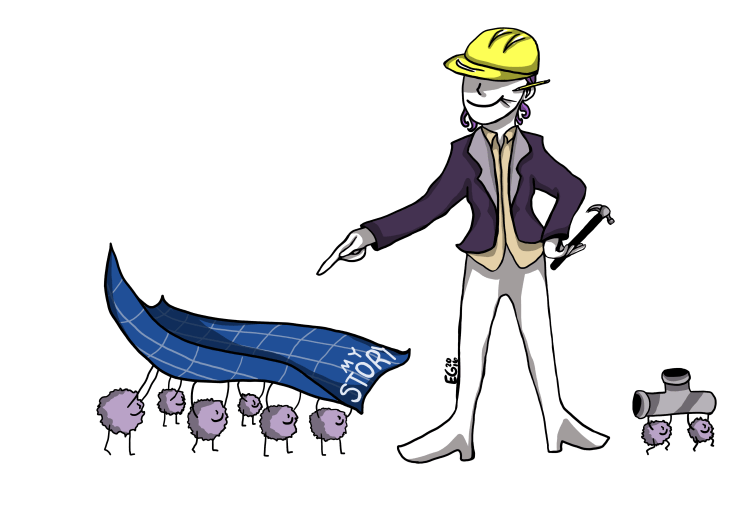
 I think there are two types of writers, the architects and the gardeners.


planting panel 1.png


The architects plan everything ahead of time, like an architect building a house. They know how many rooms are going to be in the house, what kind of roof they’re going to have, where the wires are going to run, what kind of plumbing there’s going to be. They have the whole thing designed and blueprinted out before they even nail the first board up.


planting panel 2.png


The gardeners dig a hole, drop in a seed and water it. They kind of know what seed it is, they know if planted a fantasy seed or mystery seed or whatever. But as the plant comes up and they water it, they don’t know how many branches it’s going to have, they find out as it grows.


And I’m much more a gardener than an architect.


~ George R.R. Martin


Illustrations by © 2016 Stellular Scribe
If you’re interested in my illustrations; get these designs on a t-shirt or as stickers at Redbubble! Thanks. 🙂

Music Mondays: Part IX

Just as important as establishing voice is setting up the atmosphere that you want to immerse your readers in. Tone, or the author’s attitude reflected in the writing, and mood, or the feelings the reader experiences, are often tell-tale signs of strong writing when pulled off successfully. So how do you, the writer, translate something as abstract as “atmosphere” into a piece of writing for your reader?

The answer: immerse yourself first.

Of course, the art of immersing can be accomplished in many ways, but today I have two music playlists that are chock full of dreamy drones, ambient tunes, and blissful background melodies to lose yourself in.


For razor winds, frost-bitten noses, warm bowls of stew, and bristling pines. This mix is an atmospheric gold mine of faraway instrumentals that will transport you to the peak of a sleepy mountain.


For dried flower petals, strong coffee, airy breezes, and old books. This classical guitar mix is perfect for sitting in a sunny patch and putting pen to page to conjure up sweet, summery stories.


As always, if anyone is interested in these playlists and wants to know the full track list, leave a comment and I’ll let you know.

Happy writing! 🙂


How Writing Poetry Has Helped My Fiction

If you pop by my blog often, you might notice that I write a lot of poetry in my spare time. Like, a lot. I think the current count is at well over one hundred poems in just this past year. Lord, whatever you do, do not go back and look at the early stuff. I was fifteen and angsty and I don’t want to talk about it.

With this is mind, it might also surprise you to know that poetry really isn’t my forte. I spend many more hours of the night writing novels, elaborate stories, and all sorts of whimsical fictions.

I picked up poetry by accident.

I’ve been working on my current novel for about a year and a half now (slow and steady wins the race — right?), and about mid-way through it I got to a scene where my main character was supposed to overhear a stranger sing a song that he recognized.

I did the only thing I could do, and whipped out the ol’ rhyming dictionary.

Oh, it was garbage (I can say that now), but something about that shambled-together, trite, melodramatic song opened my eyes to the potential of poetry. That song added an entirely new, visceral dimension to my story: atmosphere, fluidity, voice, movement.

My writing as a whole felt strengthened, so I made it a habit of jotting down poems everyday. As I became more comfortable, I experimented with more forms, styles, and meters. I abandoned a rhyme scheme; I rhymed religiously. I did away with punctuation and capitalization; I carefully molded each section of each sentence.

I know that to some people, poetry can seem scary. It feels like an entirely foreign, much more formidable beast than pure prose.

But I’m here to tell you that poetry really isn’t that different, and writing a little on the side might even help your fiction.


1. Capturing distinct sensations and imagery.

Poetry can be written for many different reasons — but it almost always seeks to convey some sort of image, be it concrete or abstract. Fiction in and of itself is the consolidation of diverse images to create a storyline.

The more poetry I write, the easier I find it to procure similes and metaphors to illustrate objects, meanings, and sensations. The more poetry I write, the more readily I reach into synecdoche, metonymy, and onomatopoeia to personify and paint scenes.

Poetry forces you to discover sharper, more powerful images. In fact, there was an entire movement in the early 2oth century where “imagists” considered the image to be the most important aspect of the written language. William Carlos Williams was well know for his simplistic yet highly evocative poetry. For example, here’s his 1923 poem, “The Red Wheelbarrow.”

so much depends
upon

a red wheel
barrow

glazed with rain
water

beside the white
chickens.

Now, take away the stanza structure and add some punctuation, and you’ve got a beautiful sentence that could strike color into any prose: “So much depends upon a red wheelbarrow, glazed with rainwater beside the white chickens.”
wheat

via

2. Perfecting pacing. 

Whether you’re writing free verse or a meticulously metered sonnet, poetry is all about pacing. Every choice must be deliberate yet effortless — not too short, not too long, avoid superfluous words, and use just the right amount of description to get your image across.

When I write stories, I often have difficulty managing the pacing. Sometimes I’ll get so wrapped up in a plotline or a particular paragraph of characterization that the end result will be either too long, too dull, or too disjointed.

Poetry has taught me to let my writing breathe. Every word must have a purpose and serve to move the story forward.
totoro

via

3. Balancing different emotions. 

I surprised myself with this one — I thought that I had my characters all figured out. I thought that they were well represented as emotionally complex individuals. I thought I was something special for creating such substantial individuals.

Yeah…then I started writing more poetry, and realized just how flat they actually fell.

I wrote poems — lots of small, un-extraordinary poems — that forced me to tap into emotions that I had never considered before. I truly experienced my characters through their eyes, and I delved into dark, unfathomable parts of their hearts and bright, mysterious places alike.

To give an example, here is a poem called “Wrecked” that I wrote over a year and a half ago:

They left me folded in sheets
of sand — wrapped in molding bandages
on the bed of the shore, with the surf
licking my frozen toes.
The gull who weeps for his friends
long dead is much like me — a nomad
with no name and no clan;
a roamer rejected by rose-ravished
words. Here I waste away,
repeatedly bitten by the wind’s sharpened
teeth — left to rot.

I discovered something intensely hopeless about the character this poem was written about. Something savage and vain, yet somehow wistful.

After this poem, I wrote that character anew — and for the better.
balancing.gif

via

4. Writing with the natural rhythm of speech. 

Rhythm is separate from pacing in that it deals with the fluidity, eloquence, and overall cadence of a piece of writing. In poetry, some semblance of rhythm is almost unavoidable. The same should be said for fiction and other forms of prose.

While you shouldn’t always write “how you talk”, you should always write with the rhythm of speech in mind. What I love about poetry is that it is intended to be read aloud, and therefore must have a certain “flow” about it that cooperates with the voice.

Simply put, the more poetry you write, the more fluently you will consider the world around you and your subject matter at hand. You’ll find your own unique rhythm!
notes.gif

via

5. Committing. 

Maybe this is just me, but poetry actually inspired me to write more prose.

I got on a schedule of writing poetry, becoming overcome by a deep impulse to translate my newly realized emotions, sensations, and images into fiction, and buckling down to work on a story.

I’m by no means a poetry connoisseur. I’m also nowhere near being a fully functioning, organized member of society.

But somehow, poetry made me commit. And I will forever be grateful because of it.
typing over.gif

via


So, what are your thoughts? Do you write poetry? Fiction? Do you find any meaningful connection between the two forms?

Thanks, and happy writing! 🙂

© 2016 Stellular Scribe