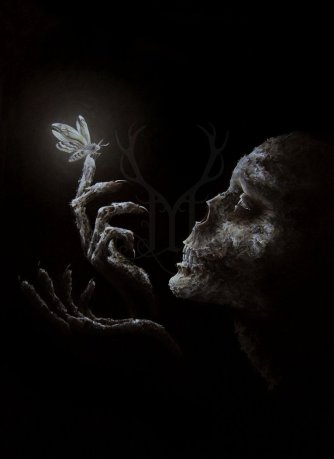
From Ophelia, To Laertes

Laertes,

There’s a willow in the wood. Dafty, you say, ‘course there’s willows in the wood. But this one’s different. This one’s tall, like a great, wrinkled man, like an old man, old as the savage sky, but he’s not afraid of what the other trees say about him. They whisper and they shake at him, but he grows tall and gentle.

No, that wasn’t a diversion. That has lots to do with what I’m to say. Willow, willow, willow wonder, through the thunder, going under, torn asunder…Ha! That rhymes, that.

Wait. Don’t go. I miss you, dear, dear brother. I wonder when you’re to return from Rome. No…Portugal? I didn’t forget. I’m just diverting. France. That’s where you are.

Mess! It’s all a mess! I won’t tell you. Not until you return. It’s bile at my feet, entrails on the tabletop, sickness in the brain. I am being crude. Forgive me. That was very crude. But this bitty city is terribly gritty…see, I’ve grown witty. Lord, have pity.

Why do I write? Besides the willow in the wood. To give advice, sweet brother. To hold your hand through the page, to hear your voice against the ink. Mad, that. Hear a voice, against ink? Ink is dead, just like our father. But I’ve given it away.

My proposal, my tidings — to get away. Further than France. France is too close; I can almost smell it. Go to Moorish lands, to salt and wind and spotted fish, to sea and sail and blustering gale. Don’t come back. Don’t think of me. This place is too rotten. I have festered along with it.

But the willow — ah, I have that.

— Ophelia

© 2016 Stellular Scribe

How Writing Poetry Has Helped My Fiction

If you pop by my blog often, you might notice that I write a lot of poetry in my spare time. Like, a lot. I think the current count is at well over one hundred poems in just this past year. Lord, whatever you do, do not go back and look at the early stuff. I was fifteen and angsty and I don’t want to talk about it.

With this is mind, it might also surprise you to know that poetry really isn’t my forte. I spend many more hours of the night writing novels, elaborate stories, and all sorts of whimsical fictions.

I picked up poetry by accident.

I’ve been working on my current novel for about a year and a half now (slow and steady wins the race — right?), and about mid-way through it I got to a scene where my main character was supposed to overhear a stranger sing a song that he recognized.

I did the only thing I could do, and whipped out the ol’ rhyming dictionary.

Oh, it was garbage (I can say that now), but something about that shambled-together, trite, melodramatic song opened my eyes to the potential of poetry. That song added an entirely new, visceral dimension to my story: atmosphere, fluidity, voice, movement.

My writing as a whole felt strengthened, so I made it a habit of jotting down poems everyday. As I became more comfortable, I experimented with more forms, styles, and meters. I abandoned a rhyme scheme; I rhymed religiously. I did away with punctuation and capitalization; I carefully molded each section of each sentence.

I know that to some people, poetry can seem scary. It feels like an entirely foreign, much more formidable beast than pure prose.

But I’m here to tell you that poetry really isn’t that different, and writing a little on the side might even help your fiction.


1. Capturing distinct sensations and imagery.

Poetry can be written for many different reasons — but it almost always seeks to convey some sort of image, be it concrete or abstract. Fiction in and of itself is the consolidation of diverse images to create a storyline.

The more poetry I write, the easier I find it to procure similes and metaphors to illustrate objects, meanings, and sensations. The more poetry I write, the more readily I reach into synecdoche, metonymy, and onomatopoeia to personify and paint scenes.

Poetry forces you to discover sharper, more powerful images. In fact, there was an entire movement in the early 2oth century where “imagists” considered the image to be the most important aspect of the written language. William Carlos Williams was well know for his simplistic yet highly evocative poetry. For example, here’s his 1923 poem, “The Red Wheelbarrow.”

so much depends
upon

a red wheel
barrow

glazed with rain
water

beside the white
chickens.

Now, take away the stanza structure and add some punctuation, and you’ve got a beautiful sentence that could strike color into any prose: “So much depends upon a red wheelbarrow, glazed with rainwater beside the white chickens.”
wheat

via

2. Perfecting pacing. 

Whether you’re writing free verse or a meticulously metered sonnet, poetry is all about pacing. Every choice must be deliberate yet effortless — not too short, not too long, avoid superfluous words, and use just the right amount of description to get your image across.

When I write stories, I often have difficulty managing the pacing. Sometimes I’ll get so wrapped up in a plotline or a particular paragraph of characterization that the end result will be either too long, too dull, or too disjointed.

Poetry has taught me to let my writing breathe. Every word must have a purpose and serve to move the story forward.
totoro

via

3. Balancing different emotions. 

I surprised myself with this one — I thought that I had my characters all figured out. I thought that they were well represented as emotionally complex individuals. I thought I was something special for creating such substantial individuals.

Yeah…then I started writing more poetry, and realized just how flat they actually fell.

I wrote poems — lots of small, un-extraordinary poems — that forced me to tap into emotions that I had never considered before. I truly experienced my characters through their eyes, and I delved into dark, unfathomable parts of their hearts and bright, mysterious places alike.

To give an example, here is a poem called “Wrecked” that I wrote over a year and a half ago:

They left me folded in sheets
of sand — wrapped in molding bandages
on the bed of the shore, with the surf
licking my frozen toes.
The gull who weeps for his friends
long dead is much like me — a nomad
with no name and no clan;
a roamer rejected by rose-ravished
words. Here I waste away,
repeatedly bitten by the wind’s sharpened
teeth — left to rot.

I discovered something intensely hopeless about the character this poem was written about. Something savage and vain, yet somehow wistful.

After this poem, I wrote that character anew — and for the better.

balancing.gif

via

4. Writing with the natural rhythm of speech. 

Rhythm is separate from pacing in that it deals with the fluidity, eloquence, and overall cadence of a piece of writing. In poetry, some semblance of rhythm is almost unavoidable. The same should be said for fiction and other forms of prose.

While you shouldn’t always write “how you talk”, you should always write with the rhythm of speech in mind. What I love about poetry is that it is intended to be read aloud, and therefore must have a certain “flow” about it that cooperates with the voice.

Simply put, the more poetry you write, the more fluently you will consider the world around you and your subject matter at hand. You’ll find your own unique rhythm!
notes.gif

via

5. Committing. 

Maybe this is just me, but poetry actually inspired me to write more prose.

I got on a schedule of writing poetry, becoming overcome by a deep impulse to translate my newly realized emotions, sensations, and images into fiction, and buckling down to work on a story.

I’m by no means a poetry connoisseur. I’m also nowhere near being a fully functioning, organized member of society.

But somehow, poetry made me commit. And I will forever be grateful because of it.
typing over.gif

via


So, what are your thoughts? Do you write poetry? Fiction? Do you find any meaningful connection between the two forms?

Thanks, and happy writing! 🙂

© 2016 Stellular Scribe


Music Mondays: Part VIII

Happy Leap Day!

I am quite busy this week, so I only have two writing playlist suggestions.


This particular mix was inspired by a W.B. Yeats poem, “He Wishes For The Cloths of Heaven.”

HAD I the heavens’ embroidered cloths,
Enwrought with golden and silver light,
The blue and the dim and the dark cloths
Of night and light and the half-light,
I would spread the cloths under your feet:
But I, being poor, have only my dreams;
I have spread my dreams under your feet;
Tread softly because you tread on my dreams.

Drawing from great classic composers like Edward Elgar and Sergei Prokofiev and modern musicians like James Galway and John Williams, this is the perfect mix for dreaming up extraordinary worlds.


For every good dream there is a nightmare, and this next mix plays to your inner demons. Dark, brooding, and at times jarring, writing tales of infernal odds and corrupted characters will only feel natural when listening to this playlist.


Happy writing! 🙂


this night

the room sulks in sheer shades of blue and gray
and you talk through curtains of shadows
these sheets feel like paper between my fingertips
but I listen as your voice lays low under your chin
you’re closer now and I don’t know where to look
your lips, your eyes — everywhere adds inertia to the top
that spins within my mind
your forehead, your ears, your nose — no
it only magnifies the shimmery something that quivers within me
your hands, they undo me
my tongue tangles words and you laugh as I squirm
your lips sell me on silence
but then you pull away and I don’t like it
the feeling of you not being there, the empty space I cannot bear
the firelight kisses your face
and that simply isn’t fair

my dreams this night are beautifully blank
my arms this night are beautifully full
and I wake beautifully blissful

© 2016 Stellular Scribe

The Mythmaker

3522abe52b97af8f797855ed570dbed2

The Mythmaker’s hands smelled like the dust that caught in the creeping light of morning. Like fabric and unwashed skin and waking. The fingers of his right hand were braided with veins, veins that popped his knuckles out like knots of wood, worked tough and solid from gripping his pen and dipping his ink a hundred times a day. The fingers of his left hand were cold, always cold, from forever reaching into those shadowy parts of the night.

His hands, that was the first thing you’d notice about him.


He made the moon his mistress
in the fated folds of night.
The stars, they were his courtiers
in the drafting of birthrights.
He read the sky and coaxed her
from the dark into the light.
From them he gathered destinies;
from them he gained his sight.


The Mythmaker was a very old man. In his youth he had seen the stars pop into being like water bugs dimpling still water. He could not remember what was before the stars, but he remembered all that came after. The water bugs stirred and chattered and rippled the dark. When that very first ripple welled, he caught it with the tip of his finger and wore it as a ring. He now had thousands of rings, singing against each other on his fingers, and plenty of room left for more.

He was a little man, with bones built like the body of a flute, hollow and whistling. The millenniums had carved the divot into his nape, sculpted the hunch into his spine. He liked to make boasts of once having black hair, radiant as the unclouded night. But that was so long ago, and his liver-spotted scalp told another story.

His age, that was the second thing you’d notice about him.


Astrologer, they called him —
the man who loved too hard.
A romancer of destiny,
the night sky’s only bard.
But he, he knew the truth of it,
of why he held his guard —
to wean from constellations
their secrets, long since scarred.


The Mythmaker had never left his tower. He had been so high up for so long that the below had become a mystery to him, a myth even feebler than the moon that shimmered at the end of his fingertips. But it made no matter what happened on the ground, for he only ever needed to look up.

He spent his nights reading the stars, tracking dances across the sky, naming clusters and systems, painting patterns that emerged against a backdrop of dust and dark matter. Everything he needed to know about that unknown below, he knew from them. And he wrote it all down, everything, in his book.

An old sun, white and withered, plucked from the night with a sigh. A long, unexceptional life, slipped into death unnoticed. Two stars collide around a void at the heart of the galaxy, and emerge as one. Two families feuded for position, and pulled away joined by their children. The moon wakes red and swollen, slow to cross the night. A soul woke dripping with blood, slow to know her peril.

He wrote down the fates of people that he would never meet, dictated the birth and destruction of nations that he would never see rise or fall. His rings rattled when he dipped his pen into the ink, and his heart fluttered as he wrote their stories. Their stories of salt and stains and shimmery somethings that gleamed in the stars and dripped at the corners of his eyes.

His elbows squeaked against his desk. The scratches of his pen punctuated the silence that hung over the world, the silence that he would whisper fair words into until his voice fissured. And though he loved the night, he loved the stories she gave him more. Stories about treachery and romance and macabre. Stories that swelled and multiplied and rippled, but retreated into the dark as quickly as they came. Stories about a below that he could never touch.

His loneliness, that was the third thing you’d notice about him.


Lady moon, she bore her dark side,
but he, he turned her round,
and leapt to kiss her cratered face
to taste tomorrow bound.
The stars, they shyly winked at him,
but he, he heard the sound
of a future falling from great heights,
a sun crashing to the ground.


The Mythmaker cried out when the book slipped from his fingers. He had lifted it from his desk to catch the moonlight on the blank page, because in that moment he swore to himself that he saw something flicker on the leg of his k, in the loop of his o, across the arch of his h. It was not wind that stole the book from his fingers (for there had never been wind before), nor was it an error of coordination (for he was old, but not unbalanced). No, what spun his book of fates over the edge of the tower was something much more visceral. The fingers of his right hand seized into stone, and then the muscles spasmed and his grip weakened. The fingers of his left hand drained of blood, and then the skin turned white and his hold deadened.

The book hurtled into the void, flapping piteously, like a canary shot between the ribs.

Perhaps it was meant to go like that. As an accident, a freak twitch of thumb, a numbing of palm. Perhaps it was meant to be that the hand that wrote and the hand that reached betrayed him both.

He did not think of that in the seconds it took for the book to become swallowed by the below. He only thought of the million mysteries that breathed and lived and died and decayed down there. He thought of what it would mean for them to have the book, to read the book, to know their fates and the history of everything that ever was or ever would be.

His dread, that was the fourth thing you’d notice about him.


Mythmaker, they called him —
the man who tempted fate.
A philanderer of futures,
a seducer of great stakes.
But he, he knew the truth of it,
of how his dalliances narrate
the crossing of impending stars
in the sealing of soul mates.


The Mythmaker reached after the crumpled canary book with hands that smelled like the dust that caught in the creeping light of morning. Like fabric and unwashed skin and waking.

And he fell.

He thought it funny, how calm he was as he plunged down the neck of the tower, away from the amorous breadth of night, away from his desk and his ink and his solitude, and towards, no less, a land he knew everything about but nothing of what it looked or smelled or tasted like.

He thought it funny, how he had spent his endless existence finding fortunes in the sky and understanding how destiny worked, and still — he had not seen this. He knew that the night kept no secrets and that it always revealed a purpose, though he fell, with his hands first, for nothing.

He thought it petrifying, that his book could touch the ground.

And he fell and he reached, with fingers that sang with a thousand rings.

His hands, that was the last thing you’d notice about him.

© 2016 Stellular Scribe

Image credit: “The Dark Tower: The Long Road” by Michael Whelan

Practicing Perceptions

You press your perceptions
of me into air-dry clay;
shall I count the ways?
I am proficient
(occasional higher level learning, you say;
but let’s not get ahead of ourselves, you say).
I am reserved parking
(easy to exit and others keep out, you say;
easy to drop off and pick up right away).
I am not temperature controlled
(a bob cat in heat when the moment strikes, you say;
but beneath all that fire’s an empty rib cage).
I am an isolated car seat
(ripped from the vehicle, tossed onto the street, you say;
more free stuff to ride in this great game of life, hey).
I am a work of heart
(a piece of work, for the start, you say;
I poke and you’re a deflated globe, you say).
I am ‘my world’
(your world, that is, you say;
you’ve only ever loved yourself, anyway).
You map your longing for me
like I’m a primary atlas;
so long, I’ve put it into practice.

© 2016 Stellular Scribe

His Perishing Flesh

you_found_me__by_malinmellryd-d6ox567
“You found me.” by MalinMellryd

What withered thumb marks the
ash on my temple,
streaking the remains  of
his perishing flesh? I cannot
call his name — indeed,
it would steal my breath.
Neither crucifix nor holy
stain, his dust does not
stir lenten requiems, but rather
dark and furled refrains that
bounce against these sacred walls.
That is not all — he leaves
me smoke, bitter incense without
the chants; I kneel in wait,
but I do not pray. I do not sing —
in truth, I can’t. His mossy teeth
protect no tongue, and his hand,
it marks my face with ash. Silently,
he reaches near to enfold me in
his perishing flesh.

© 2016 Stellular Scribe